

On a spectacular Saturday morning in early November, I joined a group of about 20 cyclists for an 18-mile guided out-and-back bike ride hosted by the Delaware Riverkeeper Network along the Delaware River from Bulls Island Recreation Area to Frenchtown, N.J.
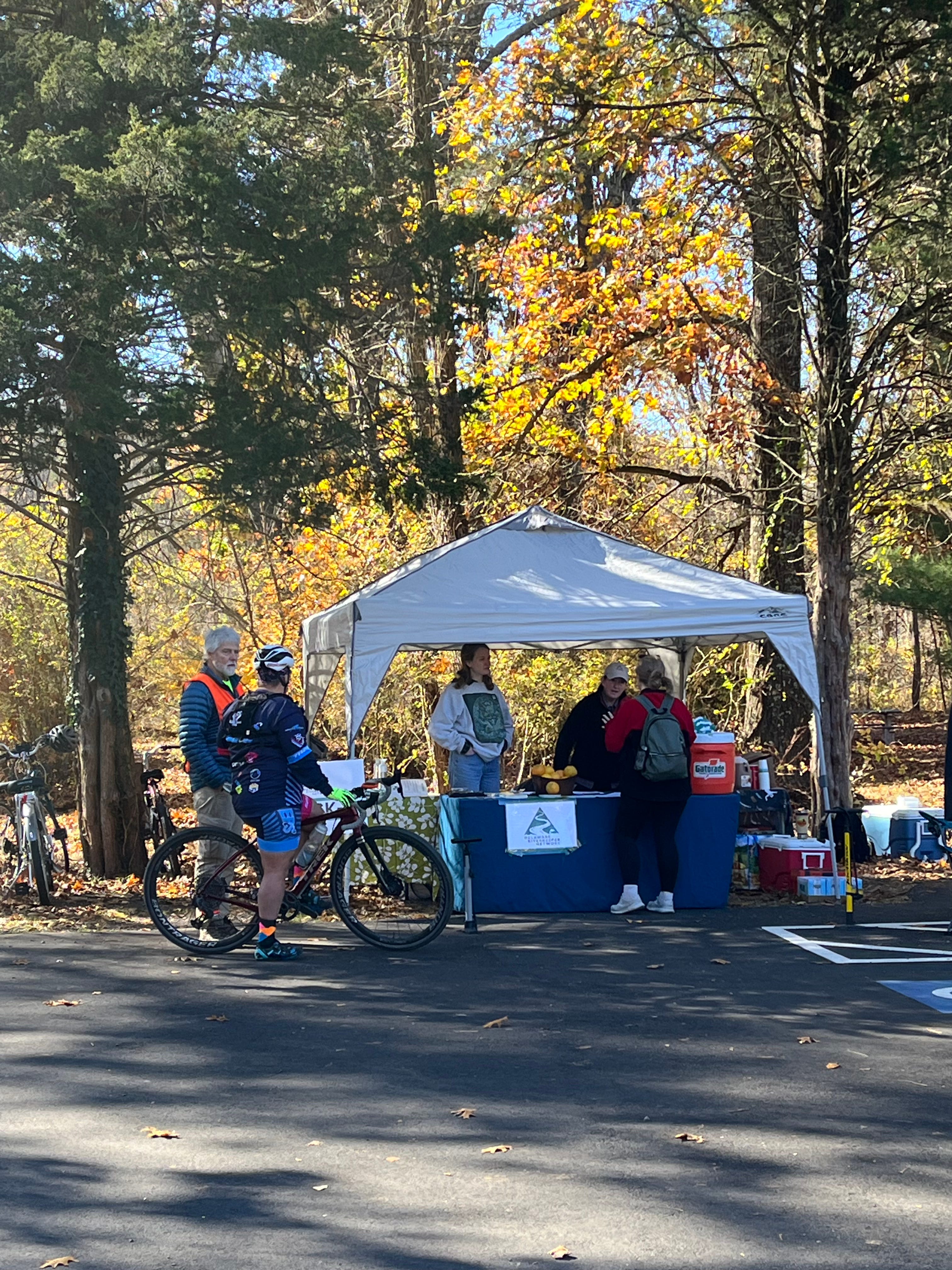
The nonprofit Delaware Riverkeeper Network consists of members and volunteers who advocate for the Delaware River Watershed that comprises Pennsylvania, New Jersey, Delaware and New York. It advocates for the watershed’s quality, monitors the water, does restoration work, and educates the public. The Network has been referred to as the lawyer for the river.
The ride reinforced my belief that we should support the work of environmental nonprofits in our areas by registering and paying the usually nominal fee for their outings. As a writer, it also reinforced the idea that you don’t have to travel far to find deep, rich story ideas. In this case, the ride led to meeting the Network’s senior scientist who took me to the river post-ride to show me an aquatic plant not seen in the Delaware River since the late 1800s that signals the river’s health is on the upswing.
Two Levels of Difficulty
Cyclists could choose from a fast-paced early ride or an 11 a.m. casual-paced ride. I chose the latter, and actually worried that I’d find myself well ahead of the group. I was wrong to worry. In fact, I pretty much fell to the back of the group from the beginning. For much of the ride, I couldn’t even see another rider as evident from the video I filmed while riding.
The ride began by gathering around a staffer who gave us instructions, as well as a rundown of what the group does. Then we headed off.
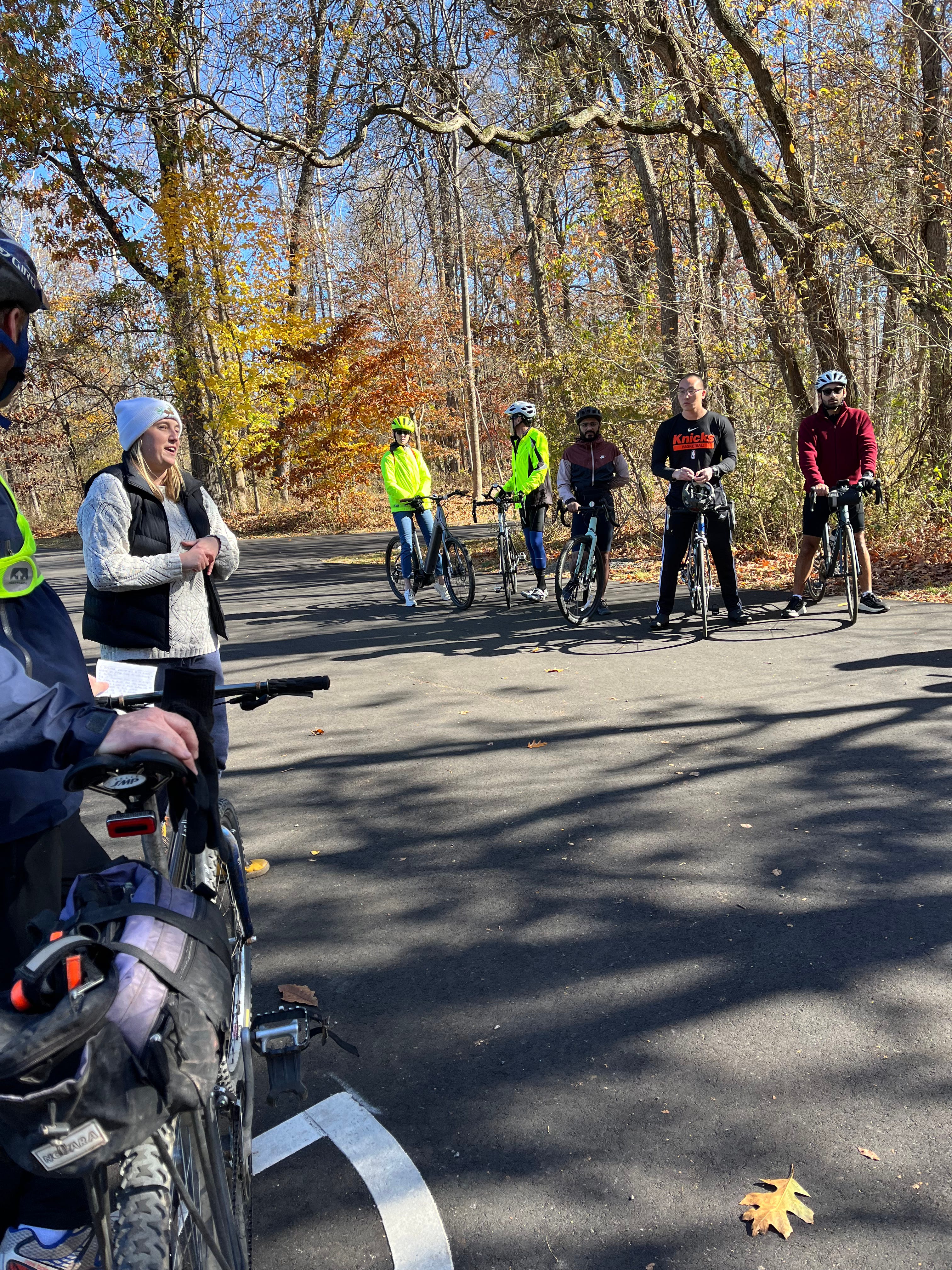
Fortunately, the ride’s leader, Erik Silldorff, restoration director and senior scientist for the Delaware Riverkeeper Network, stopped the group occasionally so stragglers like me could catch up.
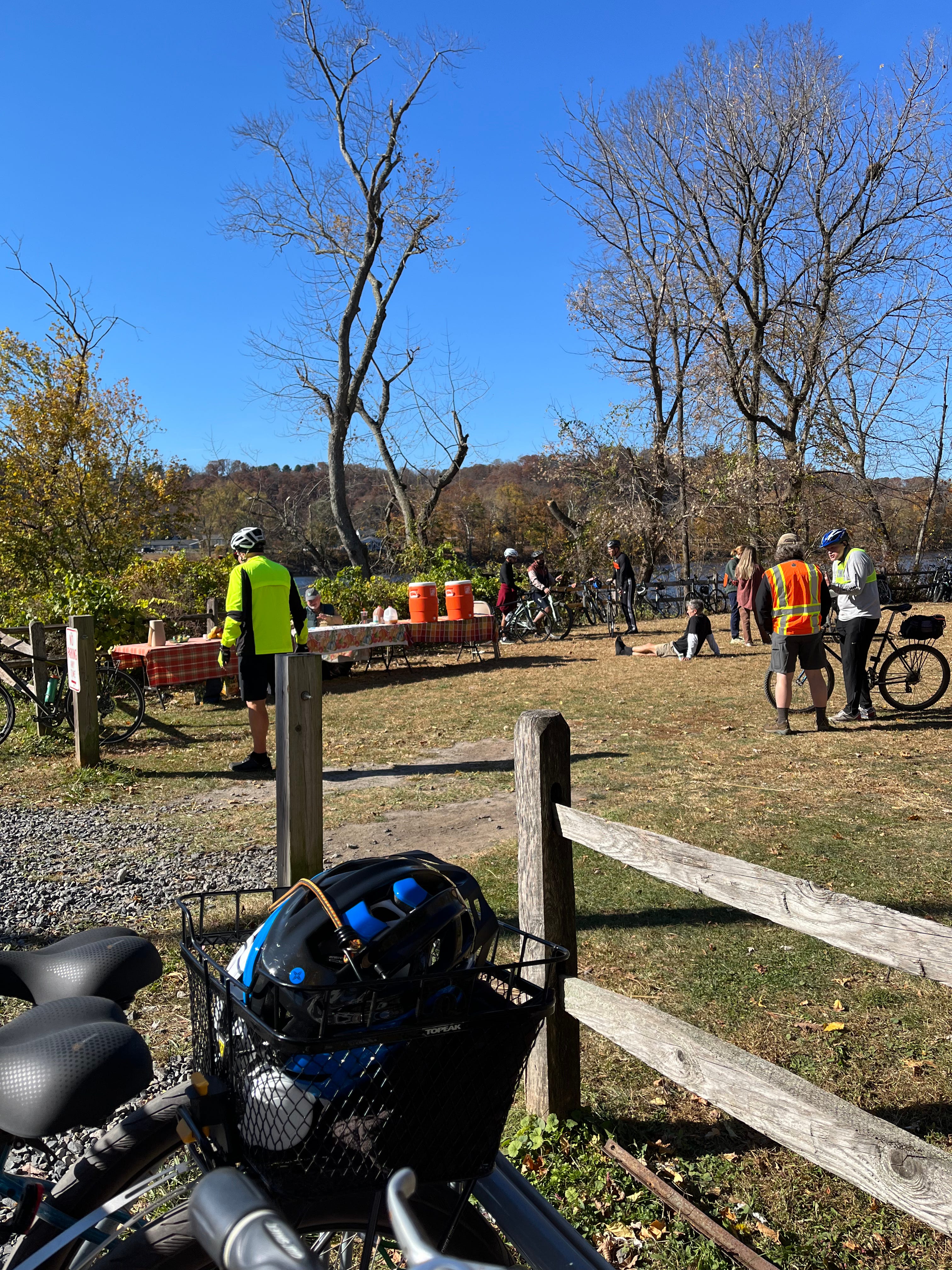
After 9 miles, we reached the artsy, historic downtown of Frenchtown (founded in 1867) where we enjoyed drinks, protein bars, and apples courtesy of the riverkeeper. As I hurriedly devoured a bar before the group started back to our starting point, I talked to Erik, who filled me in on the return of a rare and imperiled aquatic native plant last seen in the Lower Delaware River in the 1870s, and thought to have gone extinct due to industrial pollution. Its discovery meant that efforts to clean the river were working.
It’s not unusual to get ideas for articles from outings. But then you return home, and the idea gets pushed to the side until you find the time to research it. Here, I conveyed interest in learning more, and was then invited to accompany Erik after the ride to check out the bedrock further up the river to see the plant for myself.
Down By the River
The plant is Podostemum ceratophyllum, aka riverweed. It uses suction cups and a substance it secretes to secure itself on boulders and rocks in fast-flowing water. It’s a flowering plant with seeds but no petals, and has been found in rivers and waterfalls from Georgia to Canada. Its presence signals improved water quality as the plant is sensitive to runoff from development, agriculture, and sewage treatment plants. It’s thought the plant represents the return of missing habitat favored by snails, insects, turtles and fish.
I followed Erik in my car a few miles north of Bulls Island Recreation Area, then pulled down a dead-end street by a ball field and parked in a small gravel lot. Erik donned a giant backpack containing a wetsuit in case he found a large patch of Podostemum further out in the river and wanted to explore it. We walked to the trail along the river until he found an opening with a path leading down to the river. Clutching branches and trying to avoid poison ivy, we descended to the river’s bedrock.
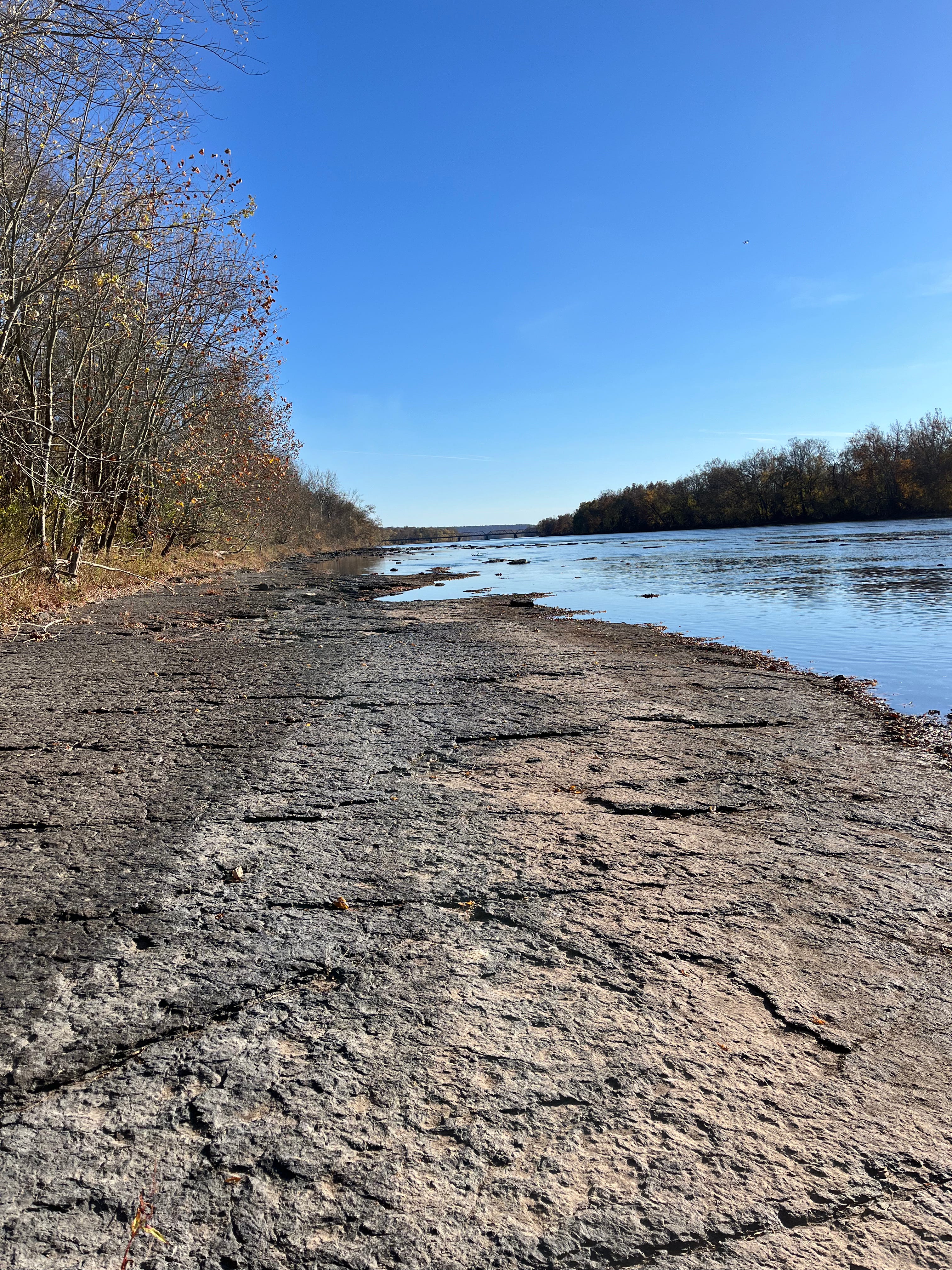
It took just a few minutes before Erik found a patch of Podostemum close enough to the water’s edge that I could touch it. I plunged my hand into the river and ran it along the plant. It felt like a bristly plastic scouring pad. Unlike moss or algae, it’s not slippery.
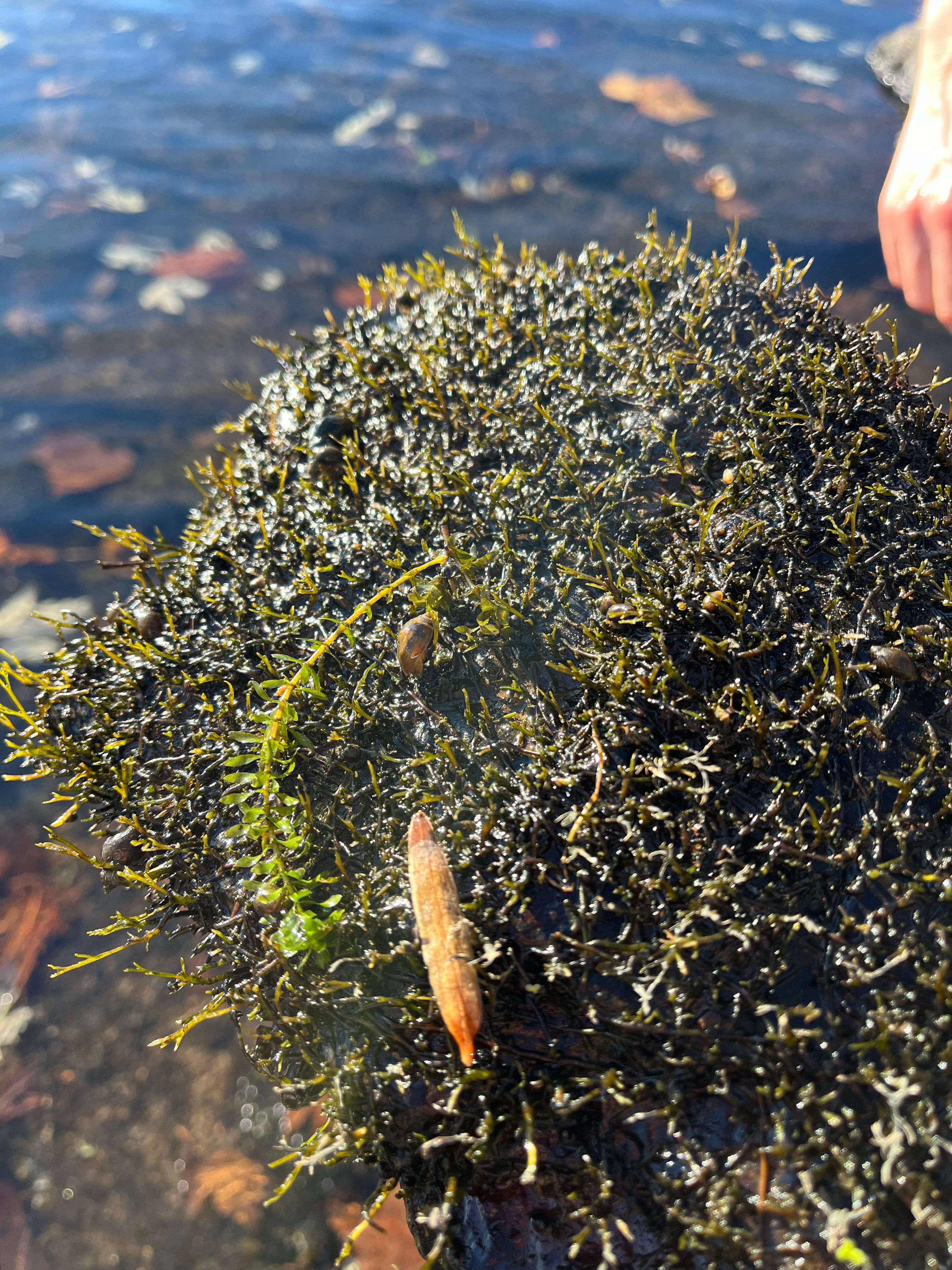
Soon Erik was wading out further in search of Podostemum populations.
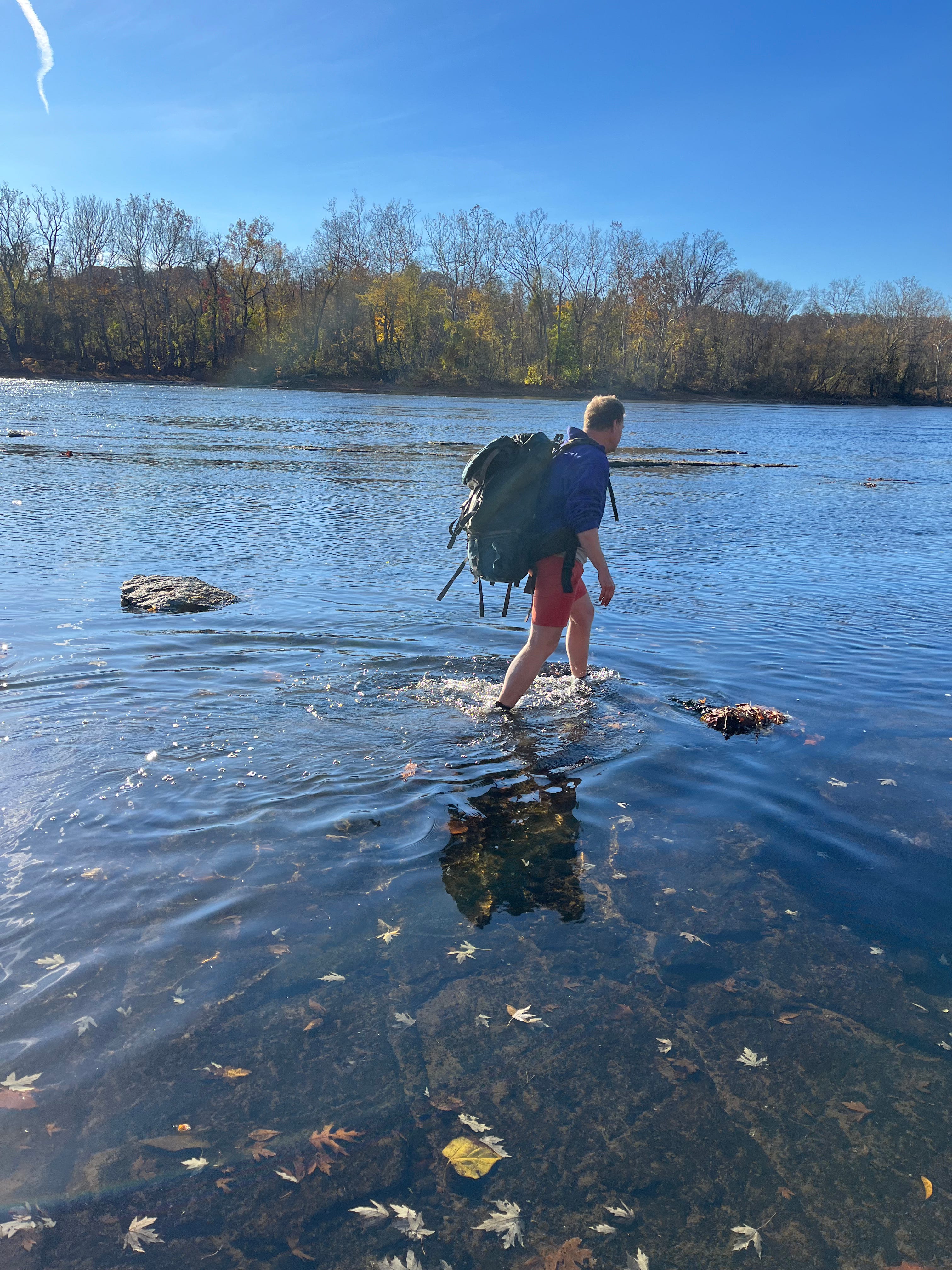
Before I left, he asked if I’d like to participate in a snorkeling expedition on the river this summer in search of Podostemum. That would give me plenty of time to do research, come up with a story angle, and pitch it to editors. I was all in.
You probably have a riverkeeper group in your area. Check it out. Donate. Participate in its outings. Aside from bike rides, riverkeepers run volunteer science surveys, river cleanups, kayaking trips, and nature walks. It a great way to immerse yourself in your local environment, and learn about the health of your local waterways, as well as the efforts to protect them.