The Making of My Washington Post Article on Butterfly Gardening
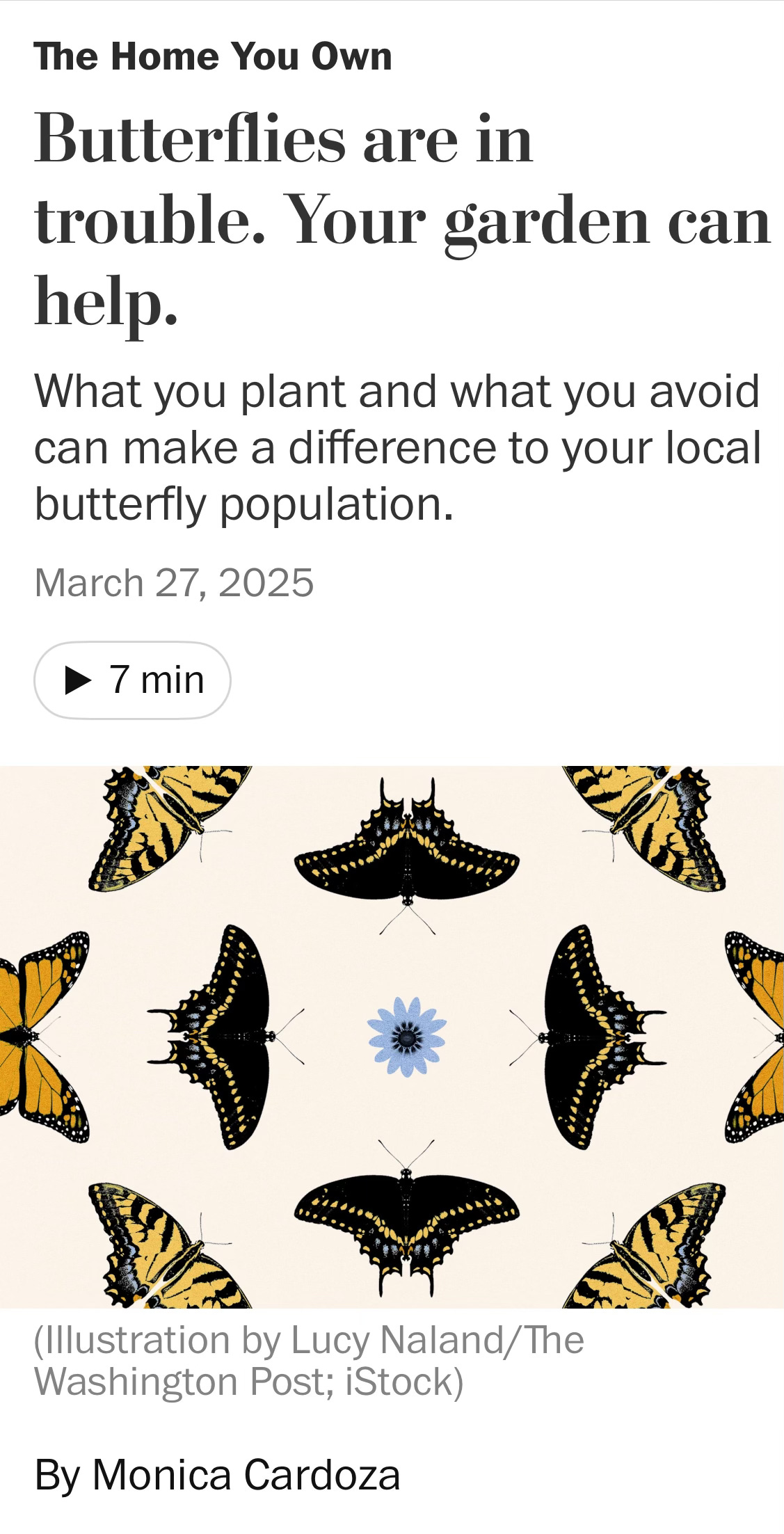
It was when I realized that the White Turtlehead (Chelone glabra) native perennial I’d planted in my backyard was as likely to attract turtles as it was its host butterfly, Baltimore Checkerspot, that I knew I wanted to write an article on how gardeners can plant the right host plants for their local butterfly populations.
Turtlehead is the primary “host” plant for the Baltimore Checkerspot, meaning females lay their eggs on it, and their caterpillars feed on it exclusively. What I failed to realize was that unless there were already populations of that butterfly species in my area, I wouldn’t attract them to my yard. So I pitched the idea to my Washington Post editor.
After hearing crickets from her, I followed up a couple weeks later. I re-sent the original pitch, and noted that a new study on declining populations of butterflies reported in the journal Science was making headlines that day and receiving lots of comments in The Washington Post, and The New York Times. Within the hour, I’d gotten the green light to write a piece on what gardeners can do to help their local butterfly populations. (Apparently, she’d missed my initial pitch, so for every freelance writer out there, follow up on your pitches!!!)
The result is Butterflies Are in Trouble. Your Garden Can Help. (Fingers crossed it’s not behind a paywall. The paywall often disappears a couple weeks after home and garden articles have run, so if this link fails to open the article, I apologize. But maybe try again later.)
Run, Don’t Dawdle, to Spring Nature Walks
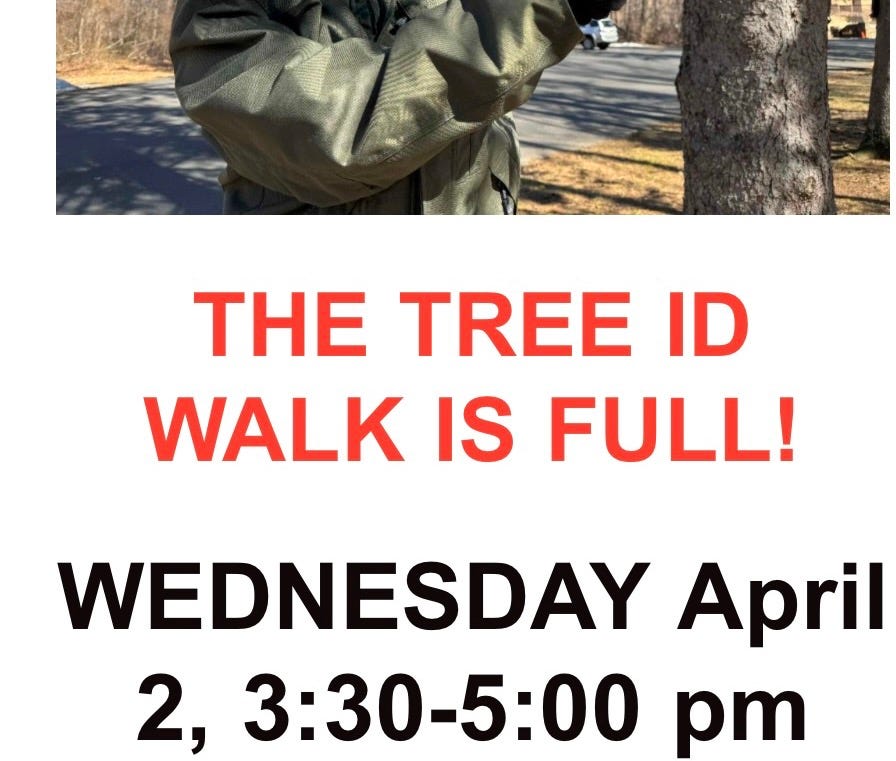
Spring may take its time arriving. But guided spring walks don’t wait around for people to register for them. By the time they’re announced, they’re often filled soon after. That’s why if registration is required, it pays to register the minute you read about them.
Spring walks might focus on:
-Tree identification, including spring flowering trees
-Plant identification, including spring ephemerals
-Mushroom identification
-Bird migration, which is great for spotting non-resident birds passing through
-Medicinal and edible plants
Some walks might include journaling where you sketch and write about the plants you’ve seen.
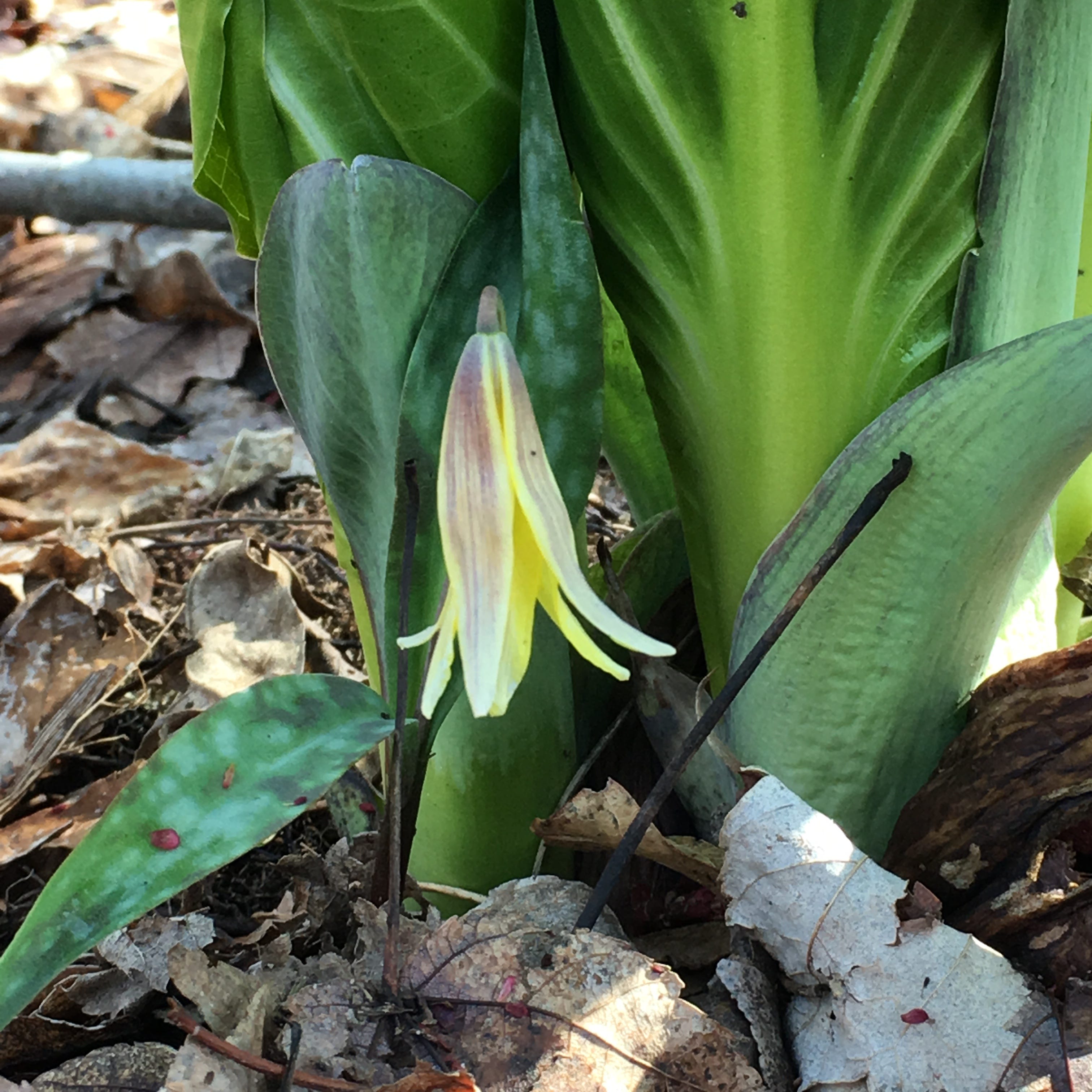
Spring walks are typically free or request a small donation, and are offered by native plant groups, as well as staff or volunteers at nature preserves, parks, and arboretums. The walks are slow, meditative, and educational—something all of us could use these days.
Solo Birding with a Wizard of an App
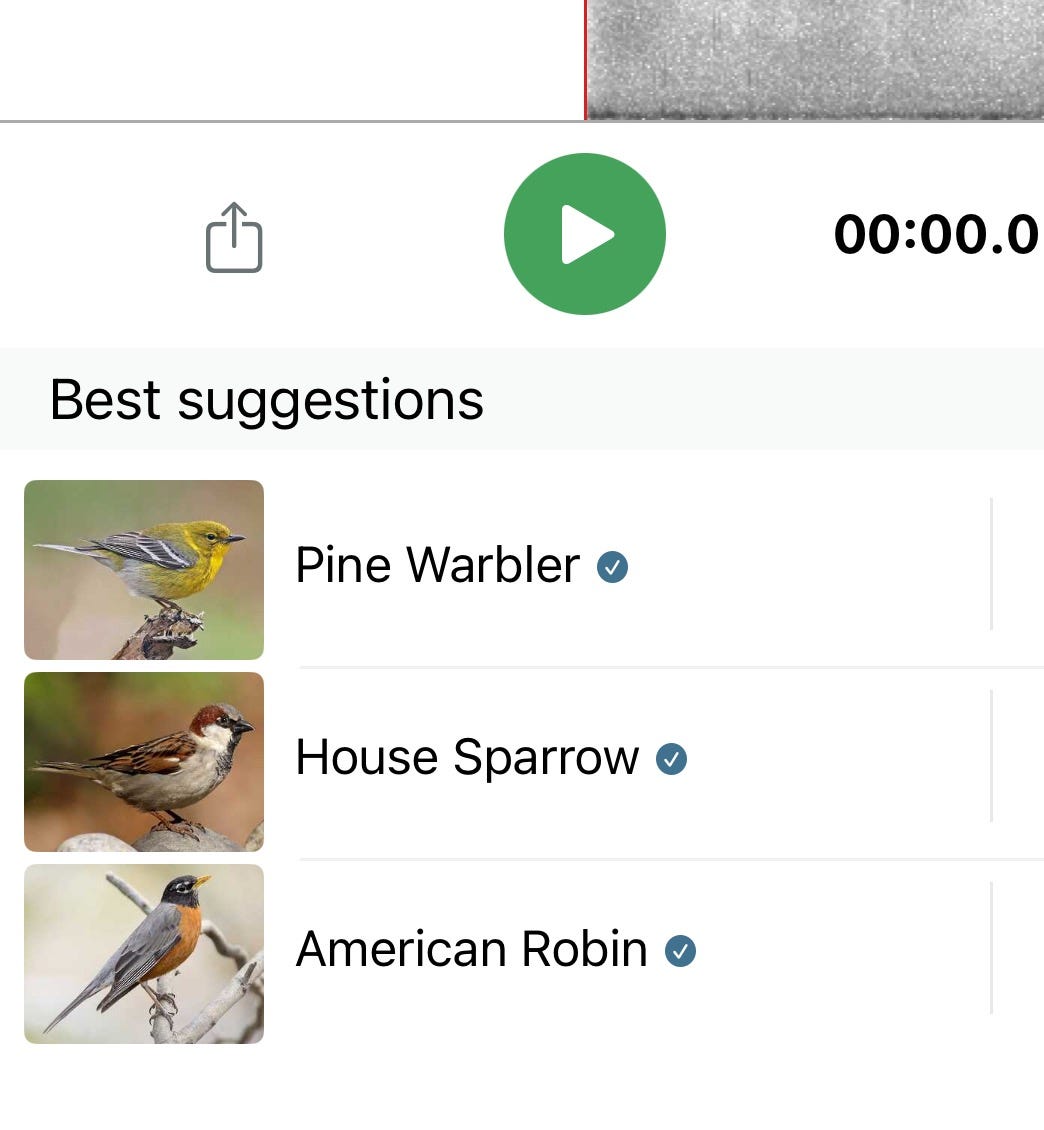
When my weekend plans fell through, I decided to do a little solo birding. I’d seen on Facebook that a pine warbler had been spotted at a nearby urban park. So I set out with my binoculars and the Merlin app downloaded to my phone.
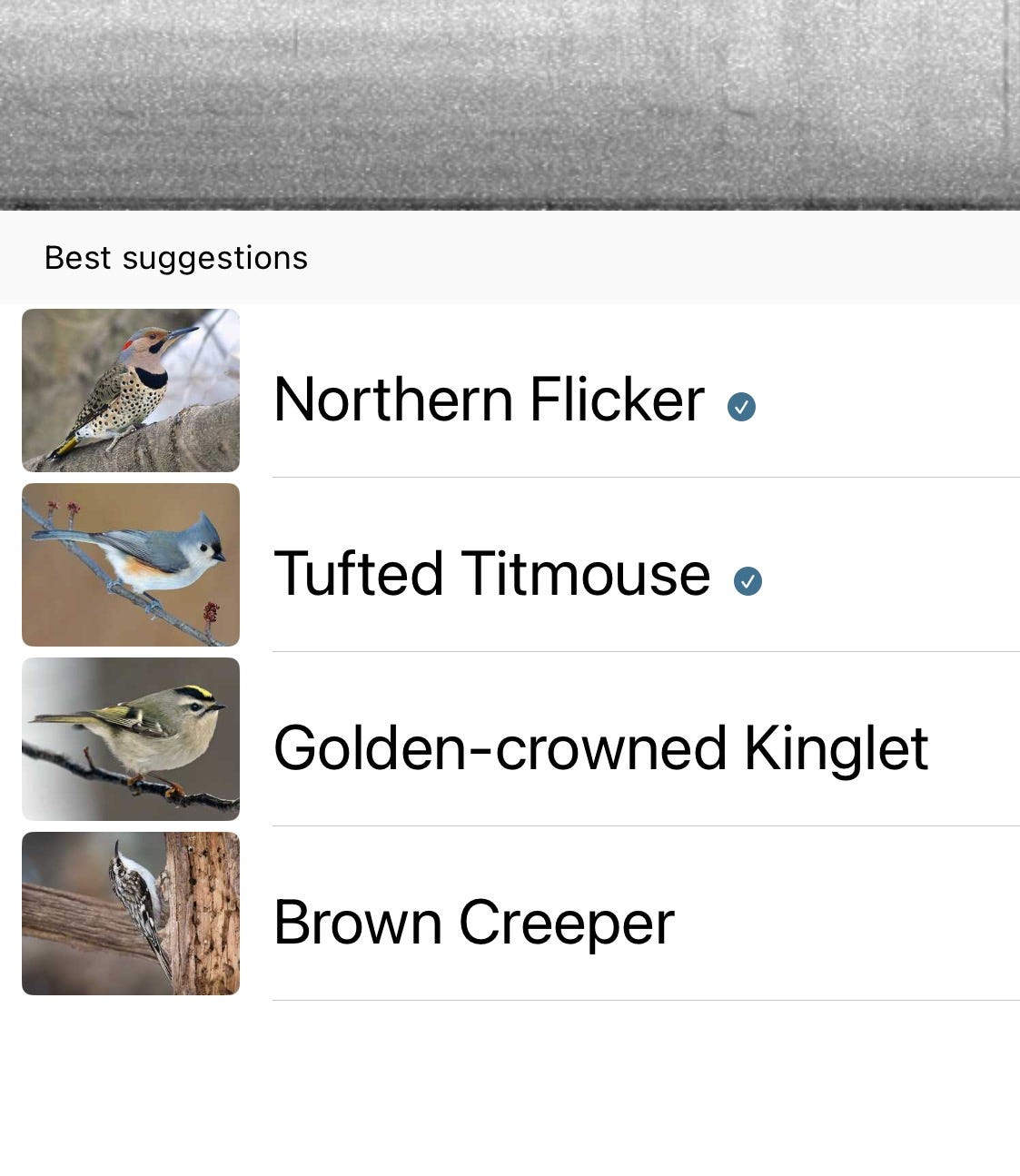
The free app was developed by the Cornell Lab of Ornithology, and recognizes birds by their calls. Since I have a tin ear, it’s become my birding companion. Even if you just download it and stick your phone out a window, you’ll be amazed at what’s out there.
Using the app, I easily found the pine warbler. I also spotted a bird I’d never seen before—a brown creeper. Bonus was several golden-crowned kinglets catching insects.
I Leave You with This…
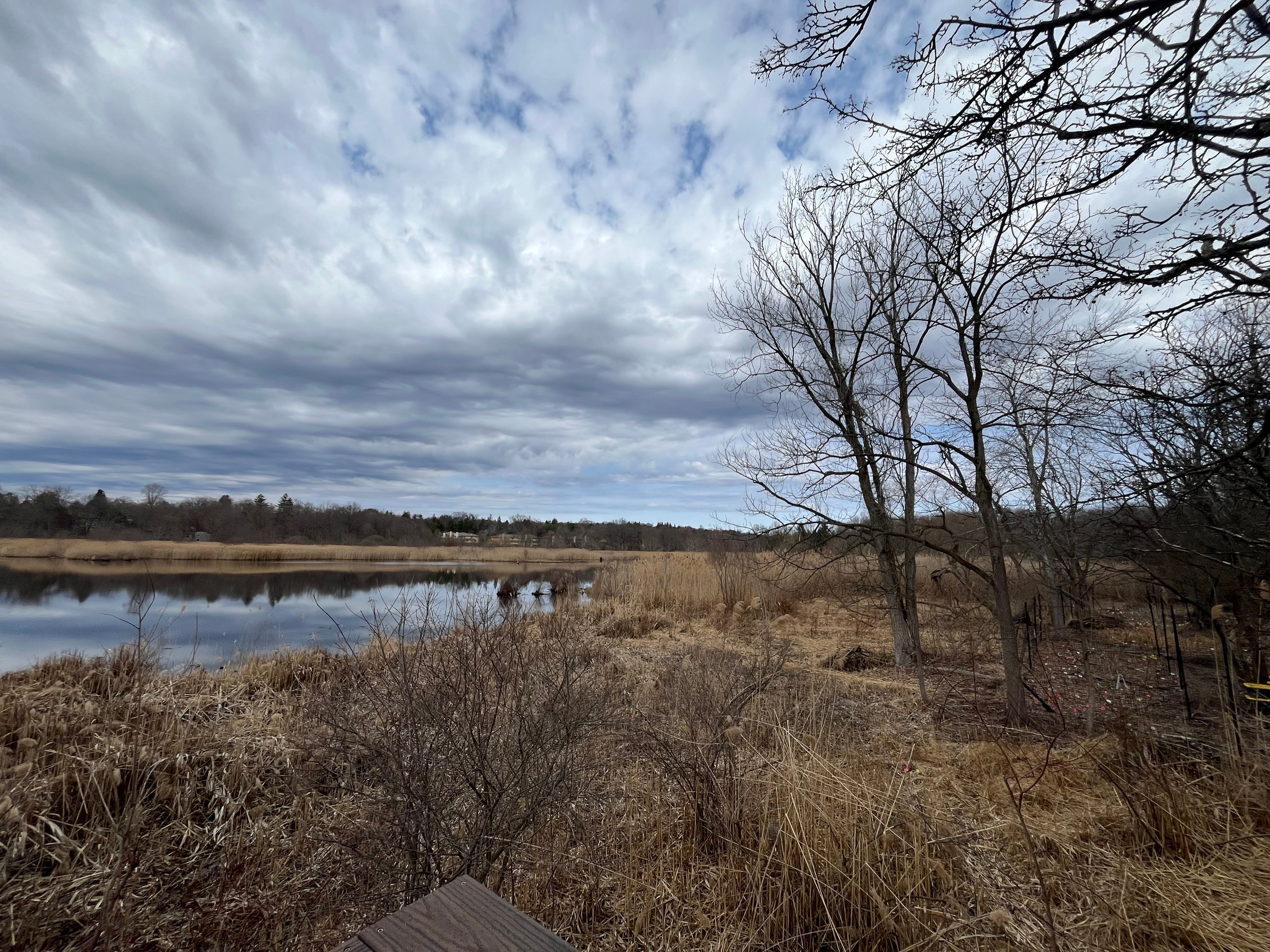
I volunteer as programs chair for the Celery Farm Nature Preserve, a 107-acre preserve in northern NJ. It’s very brown in early spring as you can see from the view from one of the raised platforms. Lake Appert’s to the left, and to the right with the teeny-tiny flags, our new native plant garden protected by deer fencing.