

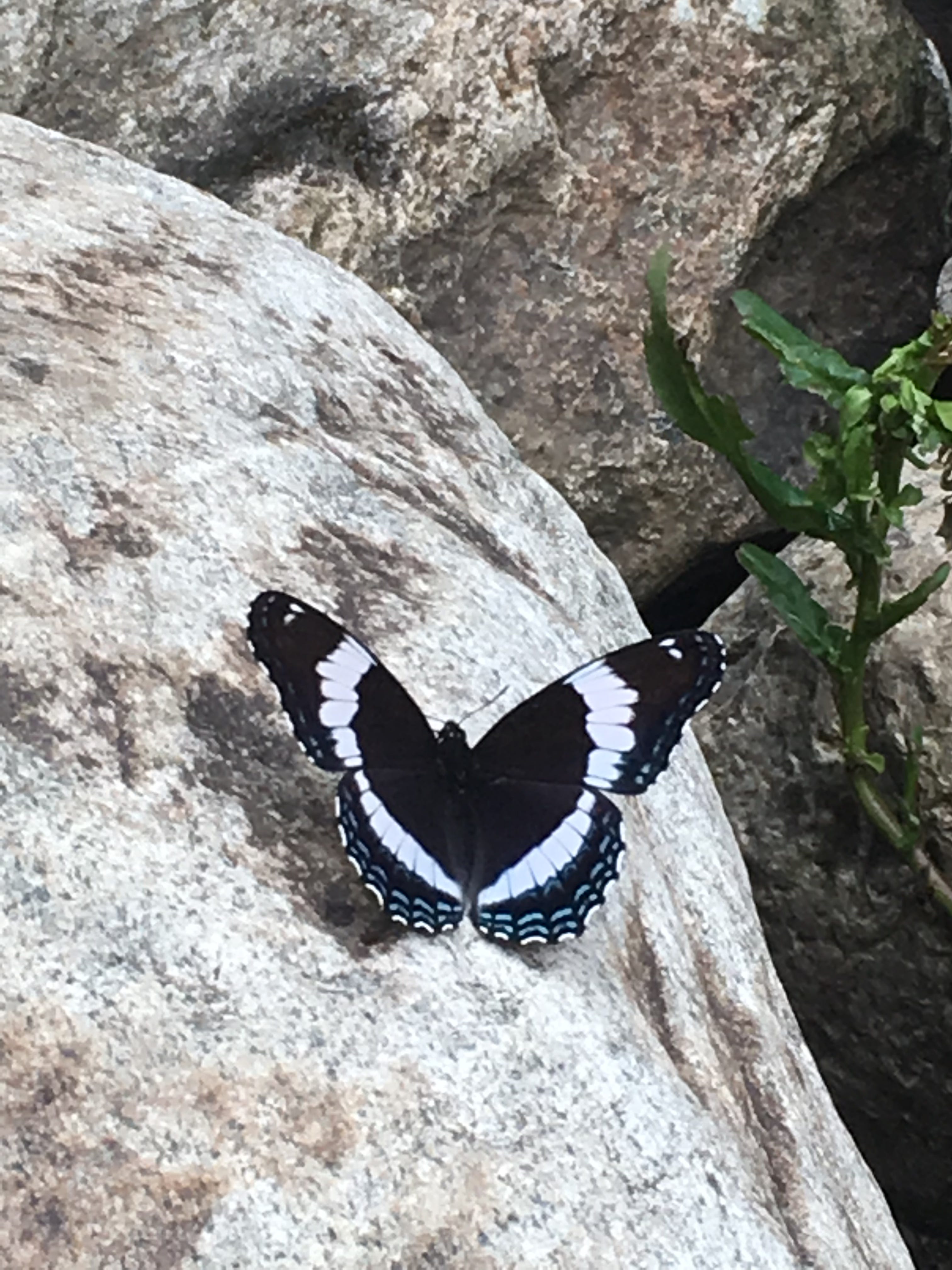
The outdoors is crawling with bugs this time of year, along with guided walks led by knowledgeable bug-loving folk, including entomologists, amateur experts, and science teachers to name just a few. These walks offer great opportunities to identify insects common to your area, and learn about the important role they play in your local outdoors. (I’ve included photos of insects I’ve taken on walks and tried to identify them as best I can.)
Butterfly walks. Who doesn’t love butterflies? Sure, you can attract them to your home with the right plants. But a guided walk through new-to-you gardens with a guide who can i.d. the winged wonders is so worth it.
Caterpillar walks. This is the first year I’ve seen walks devoted specifically to caterpillars. One walk features an entomologist-led outing in field and shrub habitat looking for monarch caterpillars, black swallowtail caterpillars, and woolly bear caterpillars. This is the type of walk where it pays to bring a hand lens or loupe. I wrote about loupes and other close-focus optics in an article I’ve linked to below.
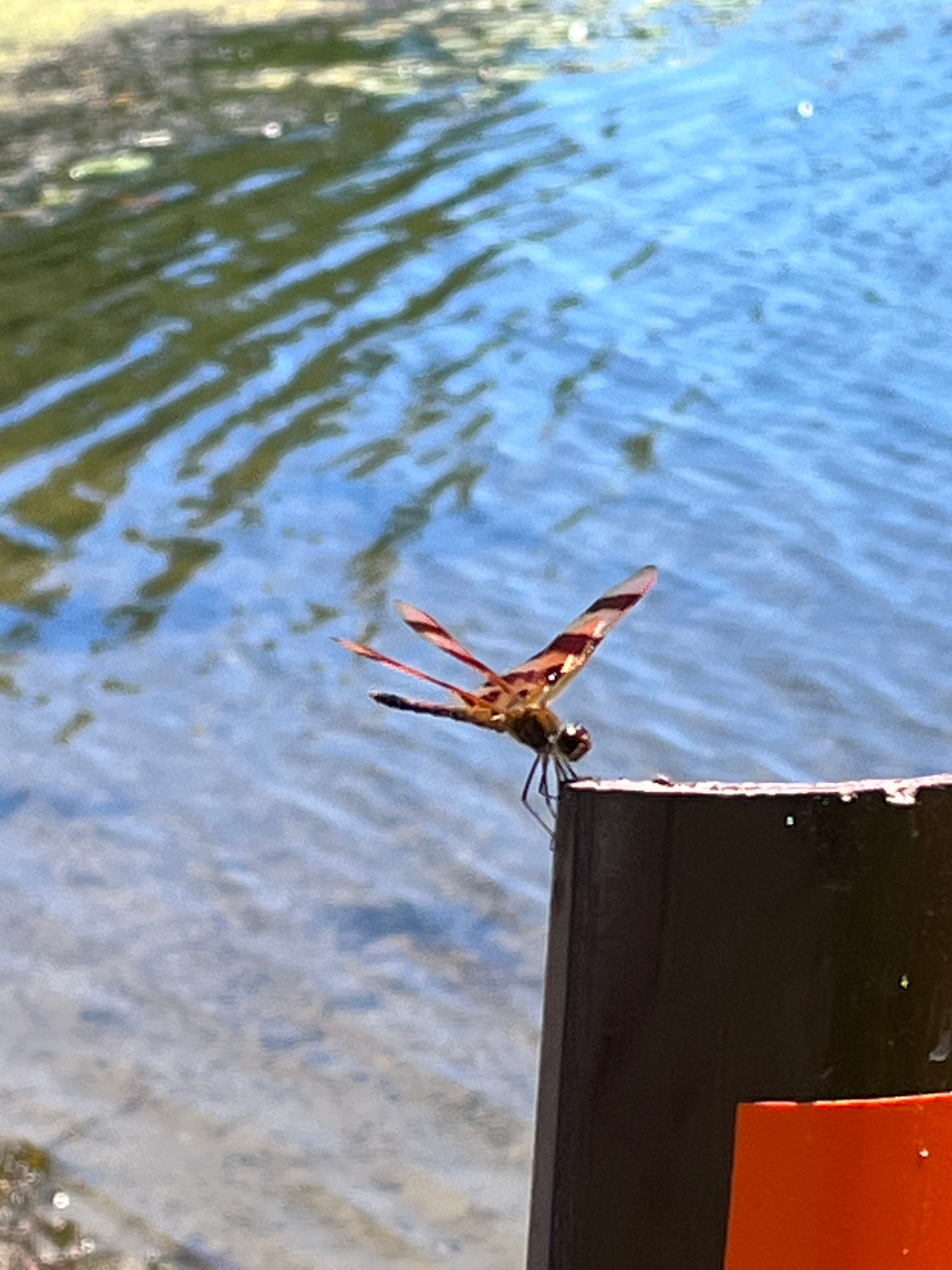
Dragonfly and damselfly walks. As temperatures heat up, look for these walks offered near lakes and other bodies of water.
Firefly walks. Here, you’ll find evening outings where you simply plop yourself in a chair and watch the firefly show. But some outings keep you on the move. One nature club runs a half-mile, self-guided trail. You start at dusk around 8 p.m. when you’ll see one particular species, then as it gets darker, you’ll see another species in the tree tops.
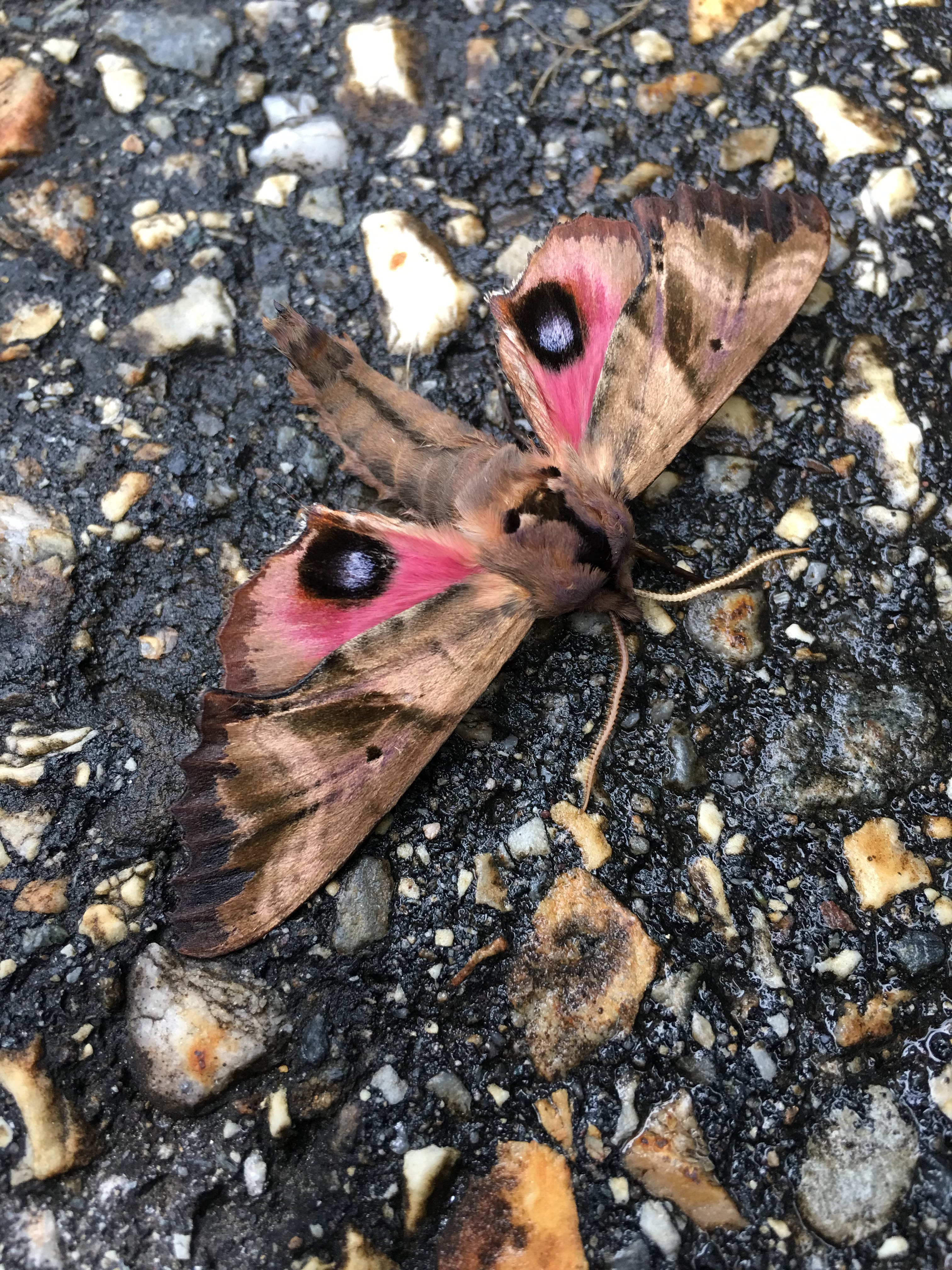
Moth nights. It’s not yet up there with the Fourth of July, but National Moth Week, which runs July 20-28 this year, has really grown in popularity. And if you’ve never spent an evening standing with a group of nature nerds and maybe even a moth expert around an illuminated white sheet strung between two trees, then you’re in for a treat. Some set out sweet banana and beer bait to attract moths, while others rely just on the bright light to attract them. You’ll see moths land on the sheet, and then it’s time to i.d. them. There are approximately 160,000 species of moths so having an expert on hand is super helpful. A moth night I attended one year featured a showing of the 2001 film Godzilla, Mothra and King Ghidorah: Giant Monsters All-Out Attack.
If you’re interested in viewing insects up close, check out this article I wrote for Birds & Blooms magazine, Close-Focus Optics and Monoculars for Nature Lovers.
Sunset Beavers and Bats Walk
The growing list of new-to-me guided wildlife walks offered today never ceases to amaze, and I spend a lot of time researching these outings as a freelancer covering easy outdoor recreation. The newest one I came across is a guided sunset beavers and bats walk offered by one of my state parks. Here’s the description: “Come take an easy walk to watch the sun set from an overlook and then around a portion of Lake Marcia in search of feeding bats and beavers while darkness settles over the park.” Like many evening and later night walks, no flashlights are allowed because the night sky provides plenty of light—and if you’ve ever been blinded by someone’s headlamp, you’ll be thankful for this policy.
Farms Offer Evening Pick-Your-Owns
June had so many hot days that some farmers decided to extend their pick-your-own hours. A lavender farm near me allows visitors to pick their own for two hours starting at 6:30 p.m. You can even bring a picnic supper during the farm’s golden hours. Another farm offers peach and blueberry picking til 7 p.m. on Fridays. It also threw an Evening on the Farm night from 6-9 p.m. where visitors enjoyed live music, farm-fresh food, local beer and wine, and pick-your-own peaches and blackberries. What are your local farms doing to beat the heat?
Look for the types of guided walks described in this issue of Probably Outside being offered by botanical gardens, state and county parks, arboretums, nature centers and preserves, native plant clubs, land trusts, birding clubs, friends groups associated with parks, and entomological societies. Sign up for their newsletters. Then register if required because these outings fill up fast.
Are you responsible for getting locals and visitors into your green spaces? If so, allow me to promote your outdoor spaces and downtowns to nature nerds and budding conservationists via content for your newsletter or blog.